
When Page Prefetching Takes a Back Seat – Exploring Trace Flag 652 in SQL Server
Learn how a trace flag affects SQL Server reading from disk and where this might be a useful thing for you to enable.
2025-09-24
2,534 reads
Learn how a trace flag affects SQL Server reading from disk and where this might be a useful thing for you to enable.
2025-09-24
2,534 reads

2025-05-16
639 reads
2025-01-15
1,875 reads

You have dropped a column and wondering why you haven't recovered any space? Let's take a look.
2024-08-01 (first published: 2024-04-26)
5,106 reads
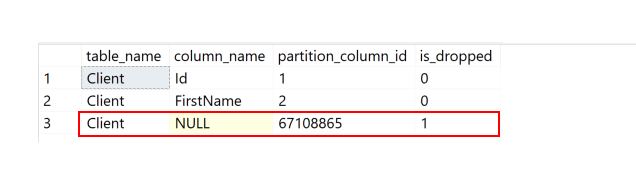
How easily can we find tables with dropped columns that need cleanup?
2024-06-07
2,666 reads
2024-04-10
474 reads
Introduction Every DML transaction reads the data before it makes any changes. Not only during a SELECT query, but when you run any DML statement, insert, update, or delete, SQL Server first fetches a bunch of pages into the buffer pool locating the desired rows and changes them while synchronously writing to the transaction log […]
2021-05-10
8,983 reads
In this article, we examine how data changes are made against heaps.
2021-05-03
4,910 reads
In Part 1 of this series, we examine the structure of data pages and how your tables are stored on these pages.
2021-04-13
21,013 reads
2020-06-26
658 reads
By Steve Jones
Here are the resources for my talk at Day of Data Boston. Slides –...
By Steve Jones
I’ve covered the values in a number of previous posts on the Book of...
By Arun Sirpal
When the evidence names the database, it says so. When it doesn’t, it stops....
Comments posted to this topic are about the item Split Large Queries in Athena...
Comments posted to this topic are about the item Finding Trailing Spaces
I have some data in a SQL Server 2025 database. It looks like this for the dbo.Customer table:
CustomerID CustomerName PreferredName
1          Steve        Steve
2          Andy         Andy
3          Brian        Brian
4          Allan        Allan
5          Devin        Devin
6          Steve        Steve
7          Sally        Sally
I want to detect which names have a single trailing space. The CustomerName is a varchar() and the PreferredName is a CHAR(). Does this query detect the problem rows?
SELECT
       CustomerID,
       CustomerName,
       PreferredName
FROM Customer
WHERE CustomerName <> RTRIM(CustomerName)
OR PreferredName <> RTRIM(PreferredName);
See possible answers